
Why Concrete Spalls and Flakes in the Pacific Northwest
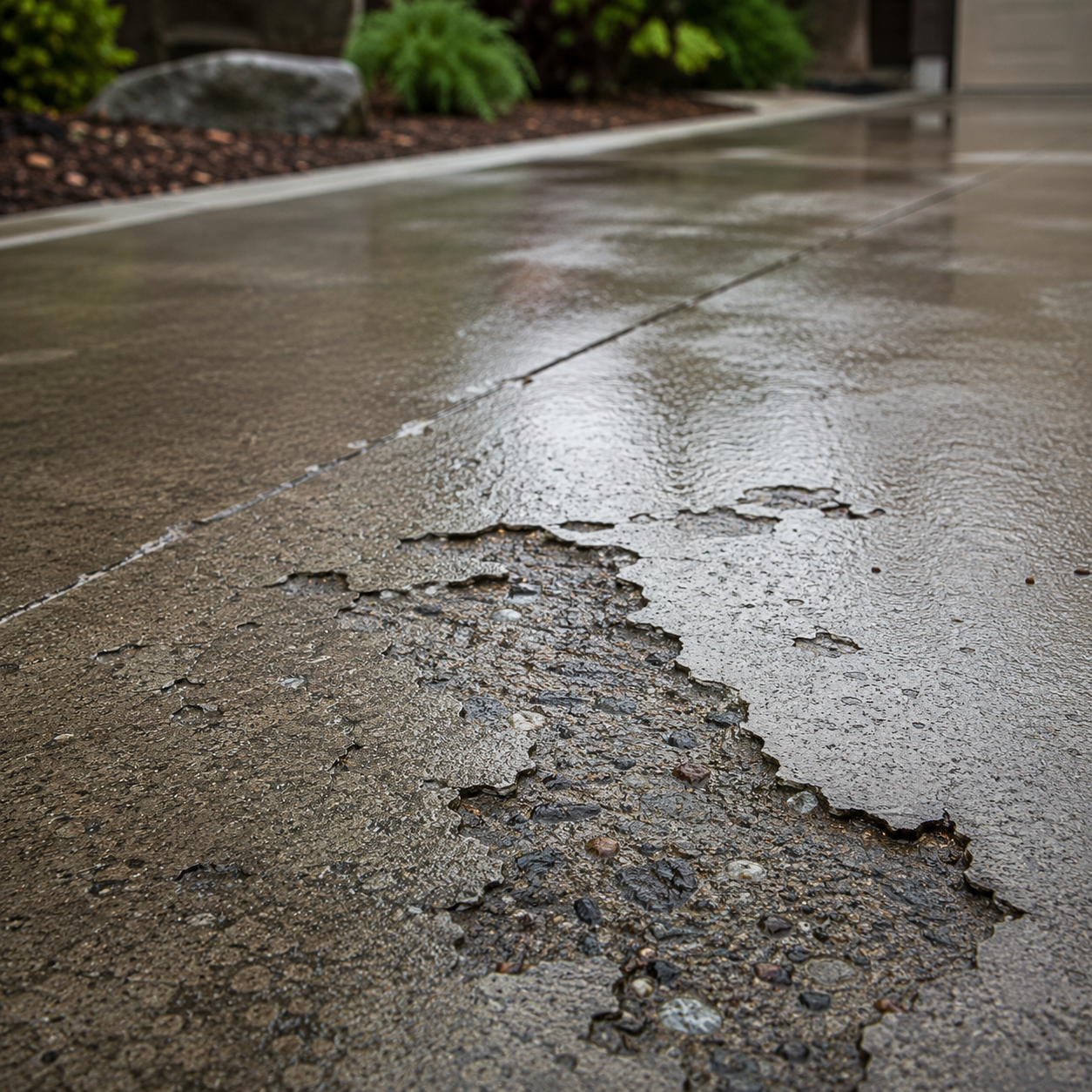
Quick Answer: Spalling is when the surface of concrete flakes, chips, pits, or peels away, exposing the rougher aggregate underneath. In the Pacific Northwest it's driven mostly by water and freeze-thaw: moisture soaks into the concrete, freezes, expands, and pops the surface off layer by layer. Other causes are de-icing salts, a poor finishing or curing job that left a weak surface, too much water in the original mix, and a missing sealer. Wet PNW conditions make sealing and proper finishing especially important. Once spalling starts it spreads, so addressing the moisture and resealing or resurfacing matters.
You glance down at a patio or garage slab and notice the surface has started to come apart — flaky patches, shallow pits, a spot where the smooth top has peeled away, revealing the gritty stone beneath. That's spalling, and in a climate as wet as the South Sound, it's one of the most common ways concrete shows its age. It looks like the concrete is rotting, but what's really happening is water and cold working on the surface from the outside in. Understanding the mechanism explains both why it happens here and how to slow it down.
Spalling Starts at the Surface, Driven by Water
Spalling is surface damage — the top layer of the concrete losing its bond and breaking away — rather than the slab cracking through. Almost every cause comes back to water getting into the concrete and then doing damage, which is exactly why the Pacific Northwest, with its constant rain and damp, sees so much of it. Concrete looks solid, but it's slightly porous, and in a wet climate, it spends much of the year holding moisture that's looking for a way to break the surface apart.
The Main Causes
Freeze-Thaw Cycles
This is the big one. Water seeps into the concrete's porous surface, and when temperatures drop, it freezes and expands. The expansion pushes against the surrounding concrete with real force, and when it thaws and refreezes again, the cycle repeats. Each freeze pries the surface a little more until the top layer flakes and pops off. Pacific Northwest winters deliver plenty of these cycles, and any concrete holding moisture is vulnerable.
De-Icing Salts
Salts used to melt ice worsen freeze-thaw damage. They increase the number of freeze-thaw cycles the surface goes through and draw more water into the concrete, accelerating the flaking. Using de-icing salt on a driveway or walkway is one of the fastest ways to start surface spalling, especially on concrete that isn't sealed.
Poor Finishing or Curing
A lot of spalling is built in at pour time. If the surface was overworked during finishing, finished while bleed water was still on top, or wasn't cured properly, the top layer ends up weak and prone to flaking later. Concrete needs to cure slowly with enough moisture to gain strength; rushing or mishandling that step leaves a surface that won't hold up to weather.
Too Much Water in the Mix
Concrete mixed with too much water is weaker and more porous once it hardens. That extra porosity lets in more water, which feeds freeze-thaw damage, and the weaker surface flakes more easily. A proper mix is part of why some slabs resist spalling, and others don't.
No Sealer
A good sealer keeps water from soaking into the concrete in the first place, which is the whole battle in a wet climate. Unsealed concrete absorbs rain and damp freely, giving freeze-thaw cycles all the moisture they need. A missing or worn-out sealer is a major reason concrete spalls in the Pacific Northwest, where sealing is one of the best defenses available.
| Cause | What's happening | Why it matters in the PNW |
|---|---|---|
| Freeze-thaw cycles | Trapped water freezes, expands, pops surface | Frequent here; main driver |
| De-icing salts | More cycles, more water drawn in | Accelerates flaking fast |
| Poor finishing/curing | Weak top layer from the start | Won't withstand wet winters |
| Too much water in mix | Porous, weaker concrete | Absorbs more PNW moisture |
| No sealer | Concrete soaks up rain freely | Sealing is a key local defense |
Avoid using de-icing salts (including rock salt) on your concrete driveway and walkways. They dramatically accelerate surface spalling by increasing freeze-thaw cycling and pulling water into the concrete. Sand for traction is a far safer choice in winter.
Why It Spreads and What Helps
Spalling doesn't stay put. Once the surface breaks open, water gets into the exposed, rougher concrete even more easily, so the next freeze-thaw cycle damages a bigger area. A small flaky patch becomes a wide pitted one over a couple of winters if nothing changes. That's why catching it early matters.
The defenses all center on keeping water out and the surface sound. Sealing the concrete — and keeping it sealed on a wet-climate schedule — blocks the moisture that drives freeze-thaw. Good drainage, so water sheds off rather than pooling, helps too. Skipping de-icing salt protects the surface. For concrete that's already spalling, resealing can slow light surface damage, while more advanced spalling may need resurfacing or repair to restore a sound, protected top layer. Proper finishing and curing on any new pour prevents the problem from starting.
Frequently Asked Questions
Usually, it starts as surface damage rather than a structural failure — the top layer is flaking off, not the slab breaking through. But it shouldn't be ignored, because once the surface opens up, water penetrates more easily and the damage spreads and deepens over freeze-thaw cycles. Left long enough, advanced spalling exposes more of the concrete to deterioration. Addressing it early keeps it from becoming a bigger repair.
Because winter is when freeze-thaw does its work. Water that soaked into the concrete during wet weather freezes when temperatures drop, expands, and pushes the surface apart, then thaws and refreezes repeatedly. Each cycle flakes off a bit more. The Pacific Northwest's combination of heavy moisture and freezing spells means concrete enters winter saturated and gets pried at all seasons, so flaking shows up and worsens in the cold months.
You can slow it and protect what's left, though existing damage doesn't reverse on its own. Sealing helps block the water that drives further flaking; improving drainage keeps moisture from pooling, and avoiding de-icing salt helps prevent further damage. For light spalling, resealing may be enough to hold it; more advanced spalling often needs resurfacing or repair to restore a sound surface. Acting early gives you the most options.
It's one of the most effective defenses, especially in a wet climate. Sealer keeps water from soaking into the porous concrete, and since trapped water is what freeze-thaw cycles use to break the surface apart, blocking that moisture removes the main driver of spalling. Sealer wears over time and needs reapplying on a schedule suited to the wet conditions, but keeping concrete sealed goes a long way toward preventing flaking.
Sand is a safer choice for traction, because it doesn't draw water into the concrete or increase freeze-thaw cycling the way de-icing salts do. While salt melts ice, it does real damage to the concrete surface over time. Using sand for grip, keeping the concrete sealed, and clearing snow promptly protects the surface far better than reaching for rock salt each time it freezes.
Keep Water Out and the Surface Holds
Concrete spalls in the Pacific Northwest because water soaks into it and freeze-thaw cycles pry the surface apart — a process made worse by de-icing salts, a weak finish, a wet mix, or missing sealer. The damage spreads once it starts, as the broken surface lets in even more water. The defense is simple: keep moisture out with sealing and good drainage, skip the salt, and make sure new concrete is finished and cured right. Protect the surface from water, and it stays smooth and sound through the wet winters.
Concrete surface flaking or pitting? — Get it sealed, resurfaced, or repaired by local pros who finish concrete for the wet Northwest. PTTC Concrete LLC serves Olympia, Tacoma, Lacey. Call (253) 785-2490.
