
How Long Does Concrete Take to Cure? The Real Timeline
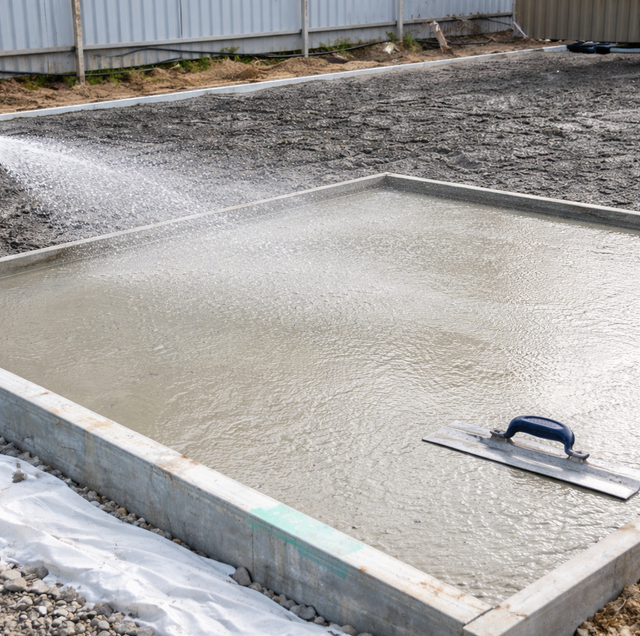
Quick Answer: Concrete reaches a walkable surface in about 24 to 48 hours, handles light vehicle traffic around 7 days when it hits roughly 70 percent of its rated strength, and reaches its full design strength at about 28 days. It keeps gaining strength slowly for months after that. The number that matters most is 28 days, but the early days are when curing conditions decide how strong the slab will ever get.
A fresh slab can look finished within a day, hard, gray, and dry to the touch. That look fools a lot of homeowners into loading it, sealing it, or parking on it long before it is ready. The strength you are counting on is not built yet. It arrives on a schedule, and knowing that schedule is the difference between a slab that lasts decades and one that dusts, scales, or cracks in its first year.
Curing Is Chemistry, Not Just Drying
The most common misunderstanding about concrete is that it hardens by drying out. It does not. Concrete hardens through hydration, a chemical reaction between the cement particles and water. When water meets cement, the two react and grow interlocking crystals that knit the sand, gravel, and paste into a single solid mass. That crystal growth is what gives concrete its strength, and it needs water to keep going.
Drying is the enemy of that reaction. If the surface dries out too fast, the cement near the top runs out of water before it can fully react, so the top layer stays weak, powdery, and prone to flaking. The goal during curing is the opposite of drying: you want to keep the concrete moist and at a reasonable temperature so hydration can run as long as possible.
A slow-baked loaf holds together far better than one pulled from the oven early, and concrete works on the same principle. The reaction that builds strength wants time and moisture, not a quick surface dry. Rush it, and you get a shell that looks done but has nothing solid underneath.
Curing, then, is the deliberate practice of holding moisture in the concrete during its early life. It is separate from set. Setting is when the mix stops being fluid and holds a shape. Curing is the longer strength-building phase that continues well after the surface feels firm.
The Cure Timeline: What Happens and When
Concrete follows a predictable strength curve. The exact hours shift with weather and mix, but the milestones below hold for a typical residential slab.
Initial Set: A Few Hours: Within roughly two to six hours of placement, the concrete reaches initial set. It is no longer workable and holds its shape, but it has almost no real strength. This is when finishers do their final troweling and cut or tool the control joints. You do not touch it after that.
Safe to Walk On: About 24 to 48 Hours: By 24 to 48 hours, the surface is firm enough for careful foot traffic. You can walk on it gently, but it is still young and soft compared to where it is headed. Keep bikes, dragged furniture, ladders, and pets off it. A dropped tool or a dragged heel can still leave a mark, and the slab is nowhere near able to carry weight.
Light Vehicle Traffic: About 7 Days: Around the 7-day mark, a properly cured slab reaches roughly 70 percent of its design strength. That is the common benchmark for driving or parking a passenger car or light truck on a new driveway. Heavier vehicles, loaded trailers, dumpsters, or concrete trucks need to wait longer, ideally the full 28 days, because their point loads can crack concrete that is still climbing toward full strength.
Full Design Strength: About 28 Days: Twenty-eight days is the industry benchmark for full, rated strength. It is the age at which test cylinders are broken to confirm a mix hit its specified number. By then, the slab has done the bulk of its strengthening and is ready for normal use and heavier loads. Hydration does not stop at day 28, though. As long as some moisture remains, concrete keeps gaining strength slowly for months and even years, just at a much lower rate.
Why Proper Curing Actually Matters
The strength a slab reaches is set in its first days. Concrete that is kept moist through the early cure can be dramatically stronger than the same mix left to dry out, and that gap never closes later. You cannot re-cure a slab after the fact.
Poorly cured concrete announces itself. The surface dusts under foot traffic because the top paste never fully reacted. It flakes and scales in thin layers. It develops a web of shrinkage cracks as the surface loses water faster than the interior and pulls itself apart. A slab cured correctly resists all three because its surface hydrated fully and evenly.
That is why the surface, not just the core, is the priority during curing. The top inch is the most exposed to sun and wind and the first to lose water, yet it is the part you walk on, park on, and eventually seal. Protecting it through the early days is what keeps the finished surface hard instead of chalky.
How Concrete Is Cured
Every curing method does one job: keep water in the concrete during those critical early days. Which one a crew chooses depends on the weather, the slab, and the finish.
Water Curing: The most effective approach is to keep the surface continuously damp. That can mean wet burlap laid over the slab and kept saturated, periodic sprinkling, or ponding water on a flat surface. Wet curing feeds the hydration reaction directly and produces some of the strongest results, though it takes attention to keep the surface from ever drying out.
Curing Compounds: A liquid curing compound is sprayed over fresh concrete to form a thin membrane that seals moisture in. It is fast and needs no follow-up, which makes it popular on larger pours. The tradeoff is that the film can affect how well a later coating or sealer bonds, so timing and product choice matter.
Plastic Sheeting and Coverings: Polyethylene sheeting laid over the slab traps evaporating moisture and holds it against the surface. It is simple and cheap, but wrinkles in the plastic can cause uneven coloring on decorative work, so crews use it selectively.
Keep a new slab damp for at least the first several days, and longer in dry or windy conditions. Misting it a few times a day during that window pays off in surface hardness.
What Changes the Timeline
The milestones above assume moderate conditions. Several factors speed the clock up or slow it down.
Temperature has the biggest effect, and it cuts both ways. Cold slows hydration sharply. Near freezing, the reaction nearly stalls, so a slab poured in cold conditions needs far longer to reach each milestone and must be protected from freezing entirely, because ice forming inside young concrete can wreck it. Heat does the opposite: it speeds the set, but a mix that sets too fast can flash-dry at the surface and crack, and it may finish weaker than a slower cure. Warm days also mean the slab loses moisture faster, so it needs more aggressive wet curing to stay on track.
Mix design matters. A richer mix with more cement, a lower water content, or a higher strength rating behaves differently on the curve than a lean everyday mix.
Admixtures are additives that deliberately shift the timeline. Accelerators speed set for cold-weather work; retarders slow it to buy finishing time in heat. If a mix has either, the standard milestones move.
Humidity and wind change how fast the surface dries. Low humidity and steady wind pull water out of the top fast, which is exactly what curing is meant to prevent.
Slab thickness plays a role too. A thick slab holds its heat and moisture longer than a thin one, which can help the cure, while a thin pour is more exposed and dries faster.
What Not to Do Too Early
Most new-slab damage comes from doing the right thing at the wrong time.
Do not put heavy loads on it early. Parking a loaded trailer, a dumpster, or a heavy vehicle on a slab before roughly 28 days can crack concrete that has not reached full strength, even if the surface feels solid.
Do not seal it too soon. Sealing traps moisture that still needs to escape and can leave the surface cloudy or weak. Most sealers call for the concrete to cure for a stretch of weeks first, so let the slab breathe before you coat it.
Do not use deicing salts the first winter. Young concrete is especially vulnerable to the freeze-thaw pressure that deicers intensify, and salts drive surface scaling on a slab that has not fully matured. Sand for traction instead through that first cold season.
And do not build on it or load it structurally before it has earned the strength. The slab looking finished is not the same as the slab being finished.
A Safety Note on Fresh Concrete: Keep the slab moist while it cures, but keep foot traffic, vehicles, and heavy loads off until it has reached the strength for that use, because premature loading is one of the surest ways to crack a slab you just paid for.
Wet concrete is caustic. Its high pH burns skin and eyes on contact, and the burns can be slow to appear, so protection matters even when nothing stings at first. Wear waterproof gloves, boots, and eye protection, keep it off bare skin, and rinse any contact promptly with clean water.
Frequently Asked Questions
Somewhat, and carefully. Accelerating admixtures added at the plant and controlled warmth are the safe levers, and they are common in cold-weather work. What you should not do is force-dry the surface with heaters or fans aimed at the slab, because that pulls out the very moisture hydration needs and trades a faster set for a weaker, crack-prone surface.
Yes, and water is actually ideal for hydration once the concrete has set. The risk is timing. Heavy rain on a slab that has not reached initial set can wash out the surface paste and ruin the finish, which is why crews cover fresh pours if weather threatens. After initial set, moisture is your friend, and permanent underwater structures cure fine because they never lack water.
Wait for full strength, about 28 days, for concentrated dead loads like a filled hot tub or a heavy shed. The load sits in one spot continuously, which is harder on concrete than a car that comes and goes, so the extra caution beyond the 7-day driving milestone is worth it.
Uneven surface moisture is normal as a slab cures and usually fades over several weeks as the last free water leaves. Persistent dark patches can point to a spot where water pooled, a thicker section holding moisture longer, or subgrade dampness wicking up, and none of those are the same as a strength problem.
It is a benchmark, not a wall. Concrete typically reaches close to its rated strength by 28 days, which is why that age was chosen as the standard test point, but strength keeps climbing slowly afterward. A slab does not suddenly stop maturing on day 29, and one tested later will usually read higher than its 28-day number.
Thinner flatwork loses and gains surface readiness a bit faster because it has less mass, but the strength milestones track closely because they depend on the mix and curing more than thickness. A thick foundation holds internal heat and moisture longer, which can actually help its cure, so it is not slower in the way people assume.
Planning a new driveway, patio, or slab and want it poured and cured right the first time — talk to a crew that treats the cure as seriously as the pour. PTTC Concrete serves Olympia, Tacoma, and Lacey. Call (253) 785-2490.
