
Signs Your Concrete Needs Sealing (Before Water Wins)
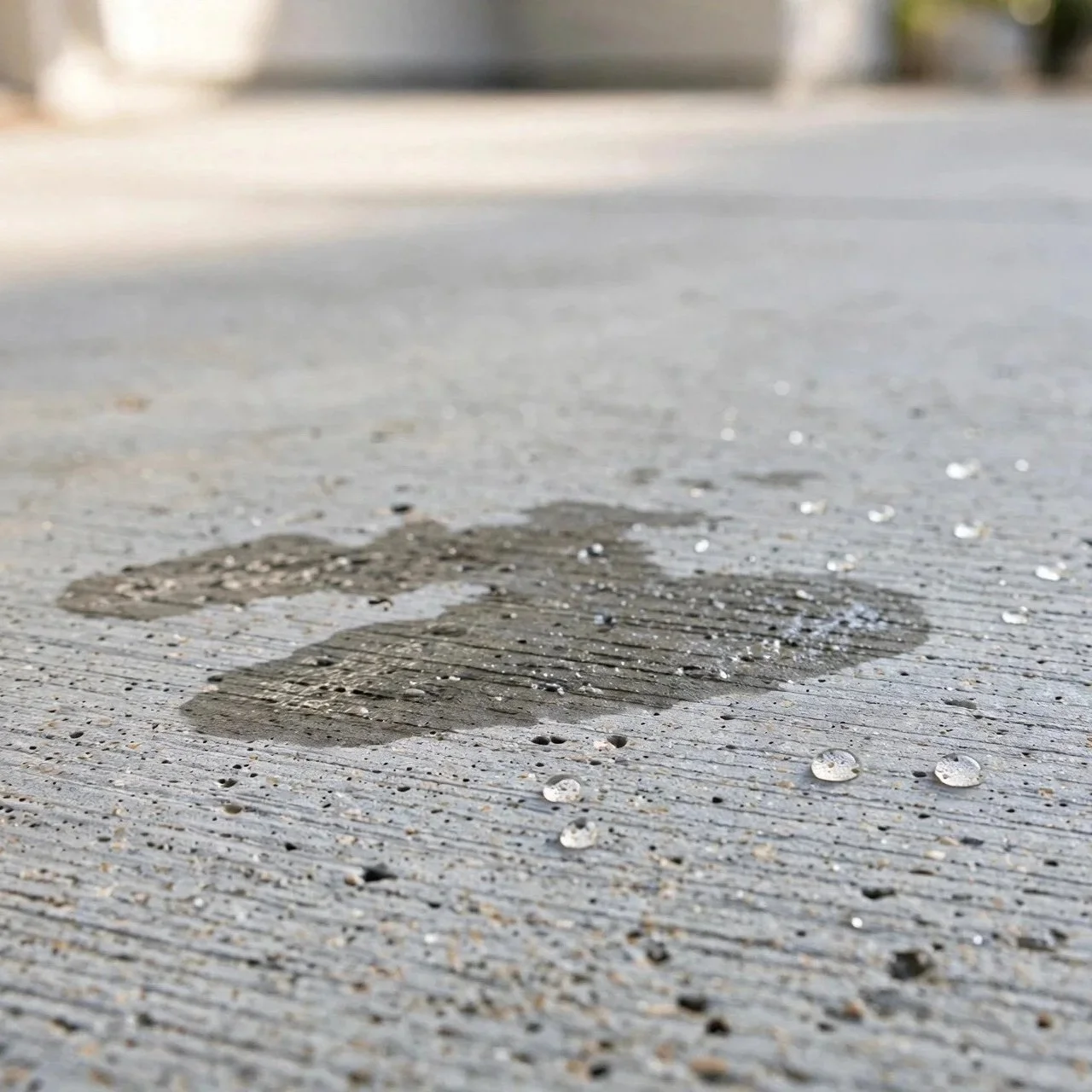
Concrete looks solid, and that fools people. Under a microscope, a cured slab is riddled with tiny pores and capillary channels, and those openings pull in water the same way a paper towel wicks up a spill. A sealer's whole job is to slow that down. It keeps water, oil, road salt, and staining agents from soaking into the surface and settling where you can't reach them, and on a slab that faces freezing weather, it blunts the freeze-thaw cycle that pries concrete apart from the inside.
The catch is that the sealer wears off. Foot traffic, tires, UV, and rain all grind it down over time, and once it thins out, the slab goes back to drinking whatever lands on it. The tricky part is that a worn sealer usually looks fine until you know what to watch for. Below are the signs that a driveway, patio, garage floor, or walkway is telling you it's time to reseal, why each one shows up, and how the fix actually works.
Quick Answer: Your concrete needs sealing when water stops beading and soaks in instead, when stains start setting, or when the surface dusts, flakes, or grows a chalky white film. The quickest check: sprinkle water on it. If it beads, the seal is holding. If it darkens and absorbs, the surface is porous and due.
Why Sealing Matters In The First Place
Start with the mechanism, because it makes every sign below easier to read. Unsealed concrete is porous, so anything liquid that touches it has a path inward. Water is the main problem. When it soaks into the top layer and then temperatures drop, that trapped water freezes and expands roughly nine percent. That expansion pushes against the surrounding paste, and when it thaws and refreezes again and again, the top surface starts to break apart. That's the origin of most surface scaling and pitting you see on older slabs.
Water is not the only thing getting in. Oil drips from a car, rust bleeding off metal furniture or rebar, tannins leaching out of wet leaves, and dissolved minerals moving through the slab all travel through those same pores. A sealer sits in or on that pore structure and shortens how far and how fast any of it can penetrate.
Here's the two-sided part worth keeping straight. Cold weather gets blamed for concrete damage, and freeze-thaw is real. But heat, UV, and constant wetting and drying wear a slab and its sealer just as surely as the rest of the year. A surface baking in summer sun and then hit by a sprinkler goes through its own expansion and contraction, and UV slowly breaks down film-type sealers regardless of temperature. Sealing protects against the whole spread of stressors, not just the winter ones.
The Water Test: Your First And Best Signal
The single most reliable sign lives in a cup of water. This is the field check crews use before quoting a reseal, and you can run it in under a minute.
The logic is simple. A working sealer makes the surface water-repellent, so droplets stay rounded and sit on top. Once the sealer has worn thin, that repellency is gone, and the porous concrete pulls the water straight in. When you see the wet spot go dark, that darkening is the slab absorbing moisture. A sealed slab stays light-colored where the water sat because almost nothing soaked in.
Run this test in a few different spots, because the sealer wears unevenly. The tire tracks on a driveway and the walking lane on a patio thin out first, while the edges and corners can still be holding. If water beads at the edges but soaks in down the middle, the slab as a whole is due.
Signs You Can See Without Any Test
Plenty of clues show up on their own if you know how to read them.
Stains that set in and stay: On a sealed slab, a coffee spill or an oil drip beads and sits long enough to wipe up. On an unsealed or worn slab, the same spill wicks into the pores within minutes and leaves a shadow you can't scrub out. Oil turns into a dark blotch, rust from a planter or a bike kickstand leaves an orange streak, and wet leaves left sitting can print their own tannin outlines. When fresh spills start staining instead of rinsing off, the surface has lost its guard.
Dusting or a chalky residue: Rub your hand across the surface and check for a fine gray or white powder. That dusting is the cement paste at the very top breaking down and shedding, often because water has been working into the surface and weakening the bond between the fine particles. A well-sealed slab doesn't chalk off on your palm.
Fading or blotchy color on a decorative finish: Stamped, stained, or integrally colored concrete relies on its sealer to hold the color depth and sheen. As the sealer degrades, colors go flat and washed out, and the finish can look patchy where wear is uneven. A decorative slab that used to have a rich, wet-looking tone and now reads dull and thirsty is asking for a fresh coat.
Early scaling, flaking, or pitting: When you see the top layer peeling away in thin sheets or small craters opening up, that's usually freeze-thaw or wear damage that got started because water had a way in. Catching this early matters because a light reseal now is a far smaller job than resurfacing a slab that has already lost its top layer.
Efflorescence, the white powdery film: A hazy white bloom on the surface is efflorescence: dissolved minerals that rode water up through the concrete and were left behind when that water evaporated at the surface. It tells you moisture is moving freely through the slab, which is exactly what a sealer is meant to limit.
Moss or algae in the shady, damp spots: Green growth takes hold where a porous surface stays wet long enough to host it, typically the north side, under trees, or anywhere drainage is poor. It's both a nuisance and a slip hazard, and it's a direct signal that the surface is staying saturated instead of shedding water.
A once-sealed slab that just looks dull: If a driveway or patio used to have an even, slightly enriched look right after sealing and now looks uniformly flat and dry, the sealer has simply worn through. Dullness alone isn't an emergency, but paired with any sign above it confirms the timing.
How Sealing Actually Works
Two broad families of sealers handle the job differently, and knowing which is on your slab explains what the signs mean.
A penetrating sealer, usually a silane or siloxane, soaks down into the pore structure and lines those capillaries so they repel water. It works below the surface, so it barely changes how the concrete looks, and critically, it lets the slab breathe. Water vapor from below can still escape, which matters for a slab sitting on damp ground. This is the low-profile, water-repellent option, and when it wears out, the tell is the water test rather than any change in appearance.
A film-forming sealer, most often an acrylic, does the opposite. It lays a thin protective layer on top of the concrete, adds a visible sheen, and deepens the color of decorative work. That film takes the surface abuse directly, so it also wears more visibly and needs reapplication on a schedule. Its weak point is moisture from underneath: if water gets trapped below the film, the sealer can cloud, whiten, or peel.
Think of a penetrating sealer as a rain jacket for the concrete's fibers and a film-forming sealer as a coat of clear paint over the top. One waterproofs from within and stays invisible; the other shields and beautifies from above but has to be redone.
Timing And A Few Cautions
New concrete is not sealed the day it's poured. It has to cure first so that excess moisture can leave the slab; sealing too early traps that water and causes trouble. Once cured, a first seal goes on, and after that, most slabs want resealing every few years. The exact interval depends on how much traffic and exposure the surface takes, which is why the water test beats the calendar. A lightly used shaded walkway and a daily-driven driveway age at completely different rates.
More sealer is not better. Over-applying a film-forming product, or piling a fresh coat over an old failing one, can build a layer thick enough to trap moisture and cloud or peel. Film sealers go on thin, in light coats. This is one place where patience and a lighter hand win.
One distinction matters more than any other here. Needing a sealer is a surface issue: the slab absorbs water and stains. Cracks that keep widening, sections that have sunk or heaved, or corners lifting away are structural issues rooted in the base, the soil, or ground movement underneath. A sealer does nothing for those, and sealing over a moving slab just wastes a coat. If the slab is shifting, that's a different repair entirely.
Working Safely If You Tackle It Yourself
If you seal your own slab, respect the product. Many sealers give off strong fumes as they cure, so work in open air, keep a garage door and windows open for indoor slabs, and follow the manufacturer's ventilation guidance. A freshly sealed surface, especially a film type, can be dangerously slick until it fully sets, so rope it off and keep foot traffic and pets clear until it's cured and grippy again. And in a wet, mossy climate, timing the work for a stretch of dry weather isn't just convenience; sealing a damp slab is one of the fastest ways to end up with a cloudy, peeling finish.
Frequently Asked Questions
Sprinkle water across the surface and watch what happens over ten or fifteen seconds. If it beads up into rounded droplets that sit on top, the seal is still doing its job. If the water flattens out, soaks in, and darkens the concrete under it, the surface is porous and due for sealing. Test a few spots, since wear is rarely even.
A penetrating silane or siloxane sealer soaks into the pores and repels water while letting the slab breathe, with almost no change to how the concrete looks. A film-forming acrylic sits on top instead, adding sheen and making colors pop, but it needs reapplication over time and can peel if moisture works its way underneath the film.
It varies with traffic and exposure rather than following a fixed schedule, but many slabs want resealing every few years. Rather than sealing strictly by the calendar, let the water-bead test tell you when it's actually time; a busy driveway will come due well before a sheltered, lightly used walkway.
No. Sealing protects the surface from water and stains, but it does nothing for structural cracks or settling. Those come from the base or the soil underneath, moving, so a slab that is sinking or heaving needs a different fix, such as addressing drainage or the sub-base, rather than another coat of sealer.
Yes. Over-applying a film-forming sealer, or sealing a slab that isn't fully cured or is still holding moisture, can trap water underneath and cause the sealer to cloud or peel. New concrete should cure first, and film sealers should go on in thin coats rather than one heavy layer that can't release trapped moisture.
Moss takes hold where a porous surface stays damp long enough for it to grow, and a chalky white efflorescence is minerals wicking up through unsealed concrete and drying at the surface. Both point to a slab that's absorbing and moving water freely, so it would benefit from a sealer along with better drainage to keep the surface from staying wet.
Book a sealing assessment — protect your slab before water and stains set in. PTTC Concrete LLC serves Olympia, Tacoma, and Lacey. Call (253) 785-2490.
