
Concrete Surface Crazing: What Those Fine Lines Really Mean
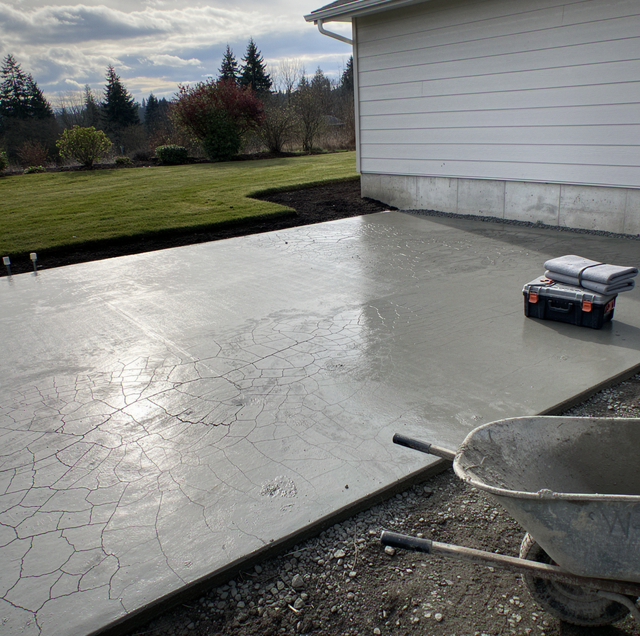
Every concrete slab cures in two layers, each moving at a different speed. The top skin dries and shrinks faster than the firmer concrete just beneath it, and that mismatch opens a web of fine lines across the surface before the slab has fully cured. Your driveway or your patio can develop this pattern within days.
You are not looking at a structural problem when that web shows up. A handful of specific triggers decide when it happens, and knowing those triggers tells you more about your slab than counting the lines yourself ever will. None of that changes by studying your concrete longer, so it helps to know what actually shrinks in your slab after the pour, before you look at anything else.
What Shrinks the Top Skin Before the Concrete Underneath Can Follow?
Fresh concrete is mostly aggregate and cement paste bound together with water, and the paste sitting right at the surface dries first because it faces open air while the mass beneath it stays wet and cool. As that top layer gives up moisture, it wants to shrink, but the wetter, stiffer concrete an inch or two down has not yet reached the same rate of drying. The thin skin at the surface is pulled across concrete that is not moving with it, and the surface opens along whatever plane happens to be weakest, usually in a random, interconnected web across the slab you just poured, not one straight line.
Low humidity, high air temperature, direct sun and drying wind all speed this process up, alone or together, by pulling moisture out of that top skin faster than a calm, humid day would allow. A driveway poured on a hot, breezy afternoon can craze while an identical pour finished under cloud cover the same week does not, even from the same batch of concrete. The crew, the mix design, and the base underneath can all be identical; only the drying conditions sitting right at the surface on pour day changed.
Because this is a top-skin event tied to finishing and early curing, it shows up early. Craze cracks typically develop within the first week after the concrete is placed, sometimes as soon as the day after the pour, long before the slab has built up much of its working strength, a timeline worth remembering before you assume the slab is failing on you. What you are watching play out is a finishing-stage effect, not evidence that a slab is aging badly or losing ground it once had.
Why the Lines Come and Go With How Wet Your Slab Has Been
Craze lines are hard to see on a dry, clean slab. They are fine enough to nearly disappear once the surface has dried out, and you may only notice the web again after rain, a hose-down, or a wash that leaves your concrete wet. The lines become visible as that moisture leaves the surface, which is exactly when crazing shows most, so the web seems to come and go each time your slab gets wet.
Over months and years, the same lines tend to look worse even though they are not getting deeper. Dirt, dust, and grime settle into the fine openings and stay there, so the pattern reads as a darker web against the surrounding concrete. Your slab is not failing any faster; it is simply collecting debris in cracks that were already present, and a slab that was barely marked with the year it was poured can look considerably rougher a decade later for that reason alone, even if you never see it get any wider.
Crazing and Map Cracking Look Like the Same Pattern at Different Scales
Crazing is sometimes called shallow map or pattern cracking, and map cracking often means similar cracks, more visible over larger areas. Crazing is the fine version: shallow, tightly spaced lines forming small cells across the surface, each typically an inch and a half or less. Map cracking is the coarser cousin, carrying the same web-like layout but with larger, more visible cells and lines you can trace with a finger without squinting.
In that sense, both trace back to the same mismatch between a drying skin and the concrete beneath it that has not caught up, whichever of the two names a contractor happens to use for it. Instead of assuming every coarse, web-like pattern shares that finishing-day story, though, keep the reading here to the fine surface web that shows up during the first week after the pour, and treat a pattern that first appears on an older slab, years after it had cured, as a separate question for your slab.
The Finishing-Day Habits That Set Crazing in Motion
Crazing traces back to choices made in the hours around the pour, not to the concrete supplier's mix design working alone. A wetter-than-needed mix, extra water added at the job site to make the slab easier to finish, or troweling and floating the surface too early or too hard all concentrate paste and water at the top, giving that thin layer more to lose and more room to shrink unevenly. Finishing over bleed water still sitting on the surface, or dusting dry cement onto that water to soak it up quickly, produces the same effect: a thin, water-rich layer right at the surface that dries and shrinks on its own schedule, out of step with the concrete below, a mismatch you would not notice unless you watched the crew work that day.
Curing matters just as much as finishing choices do. Skipping curing altogether, starting it late, or letting the surface swing between wet and dry in the days right after the pour all make crazing more likely, because the top skin needs slow, even drying to shrink without opening. Cold-weather pours carry a cause of their own: an unvented, fuel-burning heater running near curing concrete adds carbon dioxide to the air, and that gas reacting with the fresh surface can shrink the top layer and craze it, the same outcome a hot, windy summer pour reaches by a different route entirely.
Whether Crazing Gets Worse, and What Actually Helps
Craze cracks are not treated as a warning sign of further deterioration under ordinary conditions, and leaving a crazed surface alone is a legitimate call if the lines do not bother you. The lines stay confined to that thin top skin; they are not proof that your slab is losing strength or that bigger cracks are coming, and they generally do not spread down into the concrete below on their own.
If the look itself is the real complaint, resurfacing over concrete that is still structurally sound is the usual fix, laying a new wearing surface over the crazed one, so your whole slab does not need replacing. Getting an overlay to bond well means roughening that old top skin first, which a crew normally does by grinding or profiling the surface.
Grinding a crazed slab before resurfacing throws respirable silica dust into the air, so leave that step to a resurfacing crew running shrouded, vacuum-fed equipment, not to a homeowner with a rented grinder.
If staining is the part that bothers you more than the pattern itself, a penetrating sealer is the better answer: it blocks oil, grease, and other stains from soaking into the surface and darkening the lines further, without affecting the crazing underneath. What your slab is telling you, either way, is a story about how it dried on pour day, not a story about whether it will hold up.
Frequently Asked Questions
Not on its own. Industry prevention guidance starts with a moderate slump of 3 to 5 inches, so water added to loosen your mix counts, but finishing, curing gaps, and weather during your pour matter as much on your slab.
Not ordinarily. Craze cracks rarely run more than an eighth of an inch deep, so a deeper crack, or one that keeps widening on your driveway, has a separate cause worth a closer look at your slab.
No. Crazing forms during finishing and the first week of curing, long before a sealer would ever go on your slab, so sealing beforehand will not stop it from happening. Sealing afterward keeps stains out of the lines you already have, still a separate job entirely for your concrete surface.
A resurfacing overlay covers the crazed skin with a new wearing layer, so the old pattern in your slab stays hidden underneath rather than disappearing on its own. It works because the concrete underneath is still sound; a slab with real structural damage needs that addressed before an overlay becomes the call for your project.
The smooth one. Craze cracks are more noticeable on steel-troweled surfaces, and a mistimed steel trowel on your pour can bring up excess water and cement fines. A broom texture on your surface makes fine lines harder to spot on your slab.
Shade, wind exposure, and how long a section sat open before curing began can all differ across a single pour, even a few feet apart, and any of those differences is enough to change how fast the top skin dried. A driveway edge catching more sun than the section by your garage door, or a patio corner exposed to more wind than the rest, often explains the whole difference by itself, with nothing different in the concrete you chose for your project.
Get a slab looked at before deciding whether crazing needs any action from you at all — a technician can confirm the pattern is cosmetic and lay out sealing or resurfacing options. PTTC Concrete LLC serves Olympia, Tacoma, and Lacey. Call (253) 785-2490.
