
How Soil Moisture Really Cracks Concrete Foundations
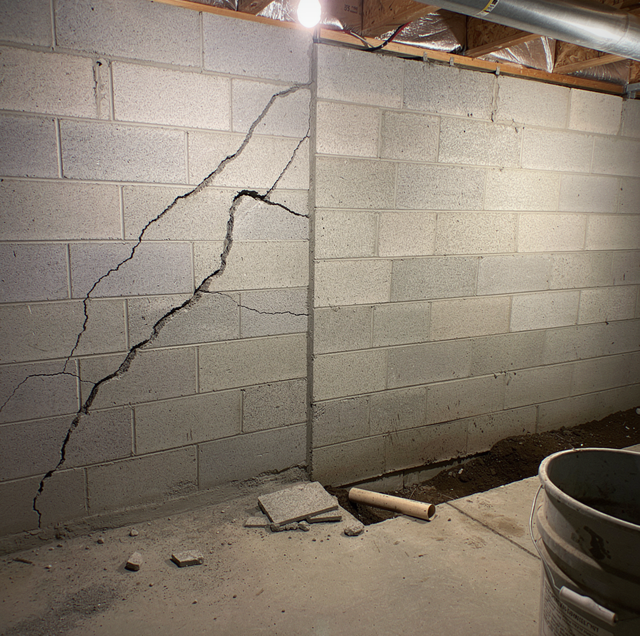
A foundation crack is usually blamed on the concrete itself: a bad mix, a rushed pour, or corner-cutting on the crew's part. That assumption misses what's actually driving most foundation problems. Concrete is remarkably consistent when it's mixed and placed correctly, but no foundation exists in isolation from the ground it sits in, and soil is anything but consistent. It swells when wet, shrinks when dry, and applies uneven pressure to whatever rests on or against it. A foundation crack is frequently the concrete's honest response to soil movement, not evidence that the concrete itself was flawed.
Soil Isn't a Static Surface
Native soil, especially soil with a meaningful clay content, changes volume as its moisture content changes. Clay particles are shaped in a way that lets them absorb water between layers, causing the soil to expand, sometimes significantly, when saturated, then contract as it dries out. That expansion and contraction cycle repeats with every wet season and every dry stretch, and it happens unevenly across a property depending on drainage, grading, nearby vegetation, and how close the soil sits to a downspout or a low spot that collects runoff.
A foundation footing sits directly on or in that moving soil. When soil beneath one section of a foundation swells while an adjacent section stays drier and more stable, the foundation experiences differential movement: one part rises or holds steady while another shifts. Concrete can tolerate a fair amount of uniform settling without visible damage, but differential movement, where different parts of the same foundation move by different amounts, is what produces the diagonal stair-step cracks in block foundations or the vertical cracks in poured walls that homeowners notice and worry about.
Hydrostatic Pressure Is a Separate Mechanism
Soil moisture affects a foundation in a second way unrelated to soil expansion. When the ground around a foundation wall becomes saturated, water in the soil exerts lateral pressure directly against the wall, a force called hydrostatic pressure. Unlike differential settlement, which stresses a foundation from below, hydrostatic pressure pushes sideways against a basement or crawl space wall. Enough sustained pressure, especially against a wall that wasn't reinforced or drained with this load in mind, can produce horizontal cracking or, in more severe cases, visible bowing.
Differential settlement: Uneven expansion or contraction under different sections of a foundation, producing stair-step or vertical cracking.
Hydrostatic pressure: Saturated soil pushing sideways against a foundation wall, producing horizontal cracking or wall bowing.
Both mechanisms trace back to the same root cause: moisture reaching the soil near the foundation unevenly or excessively, but they load the concrete in different directions and tend to produce visibly different crack patterns as a result.
Why Drainage Away From a Foundation Matters So Much
Grading and drainage are designed to prevent water from concentrating in the soil immediately next to a foundation. Ground that slopes toward a house rather than away from it, gutters that dump water at the foundation line rather than routing it several feet out, and low spots that collect and hold runoff all funnel excess moisture into the very soil zone that most directly affects the foundation. Over months and years, that concentrated moisture creates the very swelling and hydrostatic pressure conditions described above, often in a small, localized area rather than uniformly around the whole structure, which is part of why foundation cracking so often shows up on one side of a house rather than evenly all around it.
A footing drain, sometimes called a French drain, placed alongside a foundation footing and tied to a discharge point, provides a path for groundwater away from the foundation rather than letting it sit and build pressure. When combined with proper surface grading, that drainage system is often the single most effective way to reduce the soil-moisture stress a foundation experiences over its lifetime.
Frost Heave Adds a Seasonal Version of the Same Problem
In freezing conditions, moisture in the soil beneath and around a foundation can freeze and expand, a process called frost heave, which lifts soil (and anything resting on it) upward with real force. This is exactly why footings are set below the regional frost depth in the first place: soil below that depth generally doesn't freeze, so a footing placed deep enough sits below the zone where seasonal freeze-thaw movement occurs. A footing poured too shallow, or a slab-on-grade poured without accounting for frost depth, can experience seasonal heaving and settling as the ground beneath it freezes and thaws year after year, gradually working cracks wider with each cycle.
What Foundation Cracks Actually Tell You
Not every foundation crack signals the same underlying cause, and reading the pattern gives real information before any repair decision gets made.
| Crack Pattern | Likely Soil-Related Cause |
|---|---|
| Diagonal, stair-step cracking in block | Differential settlement under one section |
| Vertical cracking in a poured wall | Uneven settling or minor shrinkage, often less urgent |
| Horizontal cracking | Hydrostatic pressure from saturated soil against the wall |
| Cracking that widens seasonally | Frost heave or a recurring wet/dry cycle |
| Cracking concentrated on one side of the structure | Localized drainage or grading problem on that side |
Why the Fix Usually Starts Outside the Foundation, Not On It
Because soil moisture is so often the driver, addressing a foundation crack effectively usually means correcting the drainage and grading conditions that are feeding moisture to the soil in the first place, not just sealing or patching the crack itself. A crack that gets patched while the grading and drainage problem that caused it remains unaddressed tends to reopen or spread within a season or two, since the underlying soil movement never stopped. Foundation repair specialists routinely check surface grading, downspout discharge points, and nearby drainage before evaluating repair options for the crack itself, because fixing the symptom without addressing the moisture source rarely holds.
Frequently Asked Questions
Both matter, but expansive clay soil can generate enough pressure to stress even a well-built foundation over time, whereas sandy or well-draining soil rarely causes the same degree of differential movement, even under a well-built foundation. A soil test, sometimes required before new construction in areas known for expansive clay, tells a builder how much reinforcement and what footing depth a particular site actually needs.
Yes, in two opposite ways. Large trees planted close to a foundation can draw significant moisture from the surrounding soil during dry periods, causing the soil to shrink and settle unevenly, while heavy landscaping beds that hold water against a foundation wall instead exacerbate the saturation problem. Keeping large trees a reasonable distance from the foundation and directing landscaping drainage away from the structure both reduce moisture-driven stress.
It's typically a slow process, measured in multiple wet-and-dry cycles rather than a single season, since it takes repeated expansion and contraction, or freeze-thaw cycles, to widen a crack meaningfully. A sudden, rapidly widening crack is a different situation and usually indicates a more acute event, such as a burst pipe saturating soil quickly or a sudden slope failure, rather than gradual seasonal movement.
A sump pump manages water that has already entered a basement or crawl space through a drainage system tied into the floor, which helps prevent standing water indoors, but it doesn't reduce the soil moisture and hydrostatic pressure building up against the foundation wall outside. Exterior grading, gutter discharge, and a footing drain address the pressure at its source; a sump pump addresses water that got past that point.
Not usually. Very fine, shallow cracks that appear within the first weeks or months after a pour are more often shrinkage cracks from the concrete curing and losing moisture, which is a separate, generally cosmetic process from soil-driven movement. Cracks that appear or widen well after the initial curing period, especially those that track wet seasons, are more likely tied to ongoing soil moisture behavior.
Often, yes, when the damage is caught before it becomes severe. Correcting drainage and grading and installing or repairing a footing drain address the moisture source itself, and many settling foundations respond well to that alone. Underpinning, whether with push piers or helical piers driven down to load-bearing soil, or wall bracing to resist ongoing bowing, is a different category of work: it's structural, and it should only be designed after a structural engineer inspects the specific damage and confirms how much the foundation has moved and why. A concrete contractor can handle the drainage correction and any concrete work involved, but the engineering call on load-bearing repairs belongs to a structural engineer, and full foundation replacement is reserved for cases where that evaluation shows the damage has progressed beyond what stabilization can address.
Foundation cracks look like a concrete problem, but the ground underneath usually wrote the story first. Understanding whether differential settlement, hydrostatic pressure, or frost heave produced a given crack, and correcting the drainage or grading feeding that moisture, does more for a foundation's long-term stability than any crack repair performed in isolation.
Concerned about foundation cracking or soil movement — Get a professional foundation and drainage evaluation before problems progress. PTTC Concrete LLC serves Olympia, Tacoma, and Lacey. Call (253) 785-2490.
