
Why Concrete Discolors and Gets White Stains: 6 Causes
Quick Answer: The white powdery film on concrete is almost always efflorescence, a deposit of soluble salts that water carries to the surface as it moves up through the slab and evaporates. Other discoloration comes from uneven curing, calcium chloride accelerators, trowel and finishing variation, rust or organic staining, and clouded sealer. Efflorescence brushes off dry and rinses with a diluted acidic cleaner used per the label; stains need their own targeted treatment. Any of it comes back if the moisture feeding the slab is not fixed.
A fresh concrete slab that looked clean and gray at pour can turn up weeks later wearing a chalky white haze, a patch of orange, or a set of blotchy light-and-dark zones that make it look dirty even after a wash. It is one of the most common questions a concrete contractor hears, and the frustrating part is that most of these marks are not dirt at all. They come from inside the concrete or from what has landed on top of it, and each type has a different cause and a different fix. Sorting out which one you are looking at is the whole job, because scrubbing an efflorescence haze the way you would scrub a grease stain gets you nowhere.
Efflorescence: The White Powdery Film
Start with the white stuff, because it is the single most common complaint and the most misunderstood. That chalky, powdery, sometimes crystalline film is efflorescence. Concrete is made with cement, sand, aggregate, and water, and the mix naturally contains small amounts of soluble salts, mostly calcium hydroxide and other mineral compounds. Concrete is also slightly porous, threaded with tiny capillaries. When water moves through the slab, whether it is leftover mix water working its way out of curing concrete or groundwater and rain wicking up from below, it dissolves those salts and carries them toward the surface. At the surface, the water evaporates and leaves the salt behind as a visible white deposit.
That is the entire mechanism, and it explains the two situations where you see it most. New concrete often blooms with efflorescence in its first weeks because it still holds a lot of internal moisture that has to escape, and it carries dissolved salt out as it goes. Older concrete tends to flush white after a wet stretch, because a spell of rain or a saturated base gives the capillaries a fresh supply of water to move salt upward again. A slab can look clean all summer and go hazy after the first soaking week of fall, then partly fade on its own as it dries.
It helps to think of efflorescence the way you would a coffee ring on a countertop: the liquid spreads out, dries at the edges, and leaves a mineral rim exactly where it evaporated. The salt was always dissolved in the water; you only see it once the water is gone.
Two features tell you efflorescence apart from other marks. It is powdery and sits on or just at the surface rather than soaking in, and it is usually white to grayish, not colored. Primary efflorescence, the early bloom on new concrete, tends to be lighter and brushes away easily. A denser, harder crust that keeps returning points to an ongoing moisture source under the slab, which is a different problem than a one-time cosmetic bloom.
Blotchy and Uneven Color From Curing and Finishing
Not all discoloration is white. A lot of it is the concrete itself coming out darker in some areas and lighter in others, in patches, streaks, or a mottled map across the surface. This is color variation baked into the slab, and it usually traces back to curing and finishing rather than to anything that landed on top.
Uneven curing: Concrete gains its final color as it cures, and curing is a chemical reaction that is sensitive to how much moisture and heat each part of the slab has. If one section stays damp longer under a curing blanket or a shaded spot while another dries fast in open air, the two areas can cure to slightly different shades. Plastic sheeting that touches the surface in some places and tents up in others is a classic cause of the blotchy, cloud-shaped darker patches people notice on driveways and patios.
Calcium chloride and admixtures: Accelerators added to help concrete set faster in cool conditions, calcium chloride being the common one, are a known source of darkening and mottling. They change how the cement hydrates and can leave the slab noticeably darker or unevenly colored, sometimes in a splotchy pattern that has nothing to do with anything spilled on it later.
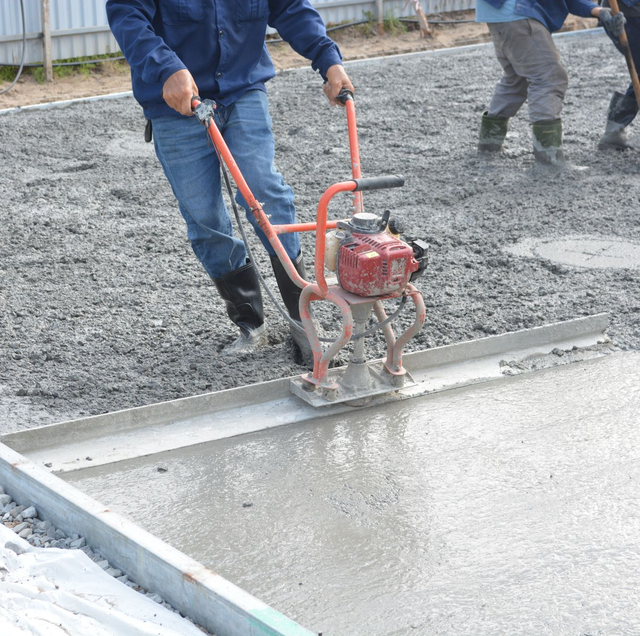
Trowel and finishing variation: How the surface was worked also shows up as color. Overworking one area with a trowel, or burnishing part of a slab harder than the rest, densifies and darkens those spots. Timing matters too: finishing while bleed water is still present in one zone but gone in another leaves a visible difference. These finishing marks are cosmetic, but they are locked into the surface and will not wash off.
Rust, Organic, and Contact Stains
Then there are the marks that came from outside the concrete and soaked in.
Rust stains are orange to brown and usually trace to a metal source: a patio chair left out through wet weather, rebar or wire sitting too close to the surface, or iron in the mix aggregate or in the water hitting the slab. Organic staining is its own category. Leaves, pine needles, mulch, and berries that sit on damp concrete leach tannins that leave brown or reddish shadows shaped like whatever was lying there. Fertilizer is a frequent and stubborn one, because many lawn fertilizers contain iron that stains concrete orange the moment granules land on a wet surface and are not swept off. Grease, oil, and other spills leave their own dark marks. Unlike efflorescence and curing color, these are true stains that have penetrated the pores, so they call for a treatment matched to what caused them.
Sealer Clouding and Blushing
A slab can also discolor because of the very product meant to protect it. When a film-forming sealer traps moisture underneath it, or is applied too thick, in humid conditions, or over a surface that was not fully dry, it can turn milky white or hazy. This clouding is often called blushing. It looks alarming because it can cover a large area in a uniform white or cloudy sheen, and people mistake it for efflorescence. The tell is that blushing lives in the sealer layer itself rather than in the concrete, so brushing and acidic cleaners do nothing for it. Fixing it means addressing the sealer, which can involve letting trapped moisture escape or having the coating stripped and reapplied under better conditions; work best left to a pro who can identify the sealer type first.
How to Clear It: Efflorescence Versus True Stains
The removal approach depends entirely on which problem you have, which is why identifying it first matters so much.
For efflorescence, start dry. Let the surface dry out, then brush the deposit off with a stiff-bristle brush or broom; a surprising amount of a light bloom comes away as powder with no chemicals at all. If a dry brush does not clear it, the next step is a diluted acidic cleaner made for concrete, used strictly per the label. These products, whether a specialty efflorescence remover or a dilute masonry-cleaning acid, are hazardous. Dilute exactly as the label states, work in ventilation, wear eye protection and chemical-resistant gloves, pre-wet the slab so the acid does not drive into it, and never mix an acidic cleaner with bleach, which can release toxic gas. Rinse thoroughly afterward so no acid residue is left to keep etching.
A diluted acidic concrete cleaner is hazardous. Dilute exactly as the label states, work in ventilation, wear eye protection and chemical-resistant gloves, pre-wet the slab so the acid does not drive into it, and never mix an acidic cleaner with bleach, which can release toxic gas.
True stains do not respond to that approach, because the problem is not a surface salt. Rust needs a rust-specific remover or an oxalic-acid product. Organic tannin stains often lift with a different chemistry than rust does. Oil and grease need a degreaser or poultice that pulls the contaminant out of the pores. Using an efflorescence acid on a rust stain, or a rust remover on an organic stain, tends to disappoint, so match the treatment to the source.
If cleaning ever involves grinding or aggressive mechanical work, or dry-cutting a sealed surface, that kicks up silica dust, which is a respiratory hazard. That work needs dust control such as wet methods or vacuum extraction and proper respiratory protection, another reason larger corrective jobs belong with a contractor set up for it.
Why It Comes Back, and When It Actually Matters
Here is the part that saves people from cleaning the same haze three times. Efflorescence is a symptom of moving water. If you clean the white off but the water source underneath keeps feeding the slab, the salts will keep arriving, and the bloom will return, though it does tend to lessen over time as the slab's finite supply of soluble salt is gradually flushed out.
Efflorescence is a symptom of moving water, so cleaning the white off treats only the appearance. Recurring, heavy bloom usually means water is reaching the slab from below through a failed vapor barrier, poor drainage, or grading that sends water toward the concrete, and fixing that moisture path is what treats the cause.
That points to the real question behind all of this: is the discoloration cosmetic, or is it a signal? Curing and finishing color variation, a one-time efflorescence bloom on a new slab, and most surface stains are cosmetic. They affect looks, not strength, and the slab is fine. But efflorescence that keeps coming back, especially with a hard crust, or that shows up alongside a persistently damp surface, spalling, or a musty smell, is telling you water is moving through the concrete in a way it should not be. That is worth having looked at, because the moisture doing it can, over years, contribute to other deterioration. Reading discoloration correctly means knowing when to reach for a brush and when to trace the water.
Frequently Asked Questions
Often yes, but slowly. A slab holds only a finite amount of soluble salt, so once the accessible salt has been carried out and deposited, primary efflorescence fades and may not return. That can take a season or two of wet-and-dry cycling. The exception is a slab with an active outside water source wicking up from the ground, which keeps resupplying salt and can bloom for years until the moisture path is corrected.
It does. Slabs made with more finely ground cements and higher cement content tend to show efflorescence more readily, and darker integrally colored concrete shows white deposits and mottling far more obviously than plain gray simply by contrast. Fly ash and slag substitutions in the mix, and low water-cement ratios, generally reduce efflorescence because they cut the porosity that lets water travel.
It helps with loose surface efflorescence but has limits and risks. High pressure can drive water deep into the slab, which, after it evaporates, can pull a fresh round of salt to the surface and make the bloom worse a week later. On decorative or aged surfaces, too much pressure also etches and scars the finish. A gentle rinse plus dry brushing is safer than blasting.
The efflorescence deposit itself is not hazardous to touch. What can matter is what it signals: persistent efflorescence on an interior slab or a basement floor points to moisture passing through the concrete, and chronic slab moisture can support mold growth in adjacent flooring, framing, or finishes. So the powder is harmless, but treat a stubborn indoor bloom as a moisture flag worth investigating.
Localized discoloration usually maps to a localized cause. A single dark cloud often marks where a curing blanket or plastic sheet lay against the surface, a bright patch can be where finishers worked the concrete harder, and an isolated orange spot typically sits under a specific metal object or a spot where fertilizer landed. Efflorescence itself concentrates where water exits fastest, so it clusters at edges, cracks, and low points where moisture pools.
A correctly chosen and correctly applied sealer reduces water entry, which cuts down on both efflorescence and stain penetration, and a penetrating sealer that lets the slab breathe is usually the safer pick for a damp environment. The catch is timing and prep: sealing a slab that is not fully cured or is still releasing moisture can trap that moisture and cause the milky blushing described above, so a sealer applied too soon can create the very discoloration it was meant to prevent.
Get the white haze and blotchy patches on your concrete diagnosed right — clear the marks and fix the moisture feeding them. PTTC Concrete LLC serves Olympia, Tacoma, and Lacey. Call (253) 785-2490.
