
Why Is Moss Growing on My Concrete? The 3 Conditions Behind It
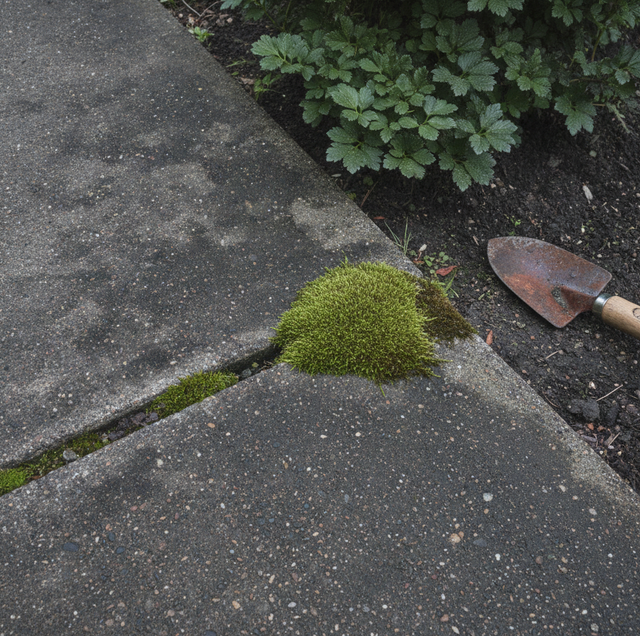
Moss and green algae do not appear on concrete at random. They show up wherever three conditions overlap: steady moisture, shade that keeps the surface from drying, and a slightly rough, porous top layer that holds water and airborne spores long enough for growth to root. Take away any one of those three, and the slab stays clean. Leave all three in place, and no amount of scrubbing keeps the green off for long.
Quick Answer: Moss grows on concrete because the surface stays damp, shaded, and porous. Concrete wicks and holds water, and in a low-airflow, low-sun spot, it stays wet long enough for moss and algae spores to take hold. To fix it for good, remove the growth gently, then correct the drainage, sunlight, and porosity that let it start.
What Moss Actually Needs to Grow
Concrete looks solid, but the surface is riddled with tiny pores. Think of it less like glass and more like a hard sponge: it pulls in water from rain, sprinklers, and the ground below, then releases it slowly. In a spot with good sun and airflow, that moisture burns off within hours, and the pores dry out. In a shaded, still corner, the same slab can stay damp for days.
That lingering dampness is the first requirement. The second is shade, because direct sun both dries the surface and delivers ultraviolet light that many of these organisms tolerate poorly. The third is the porous texture itself, which gives spores a foothold and a reservoir of trapped water to grow in. Moss and green algae drift in on the wind and in runoff constantly, so spores are almost always present. They simply cannot establish on a surface that dries out quickly.
This is why the same driveway can be spotless down its sunny center strip and furred with green along a shaded edge. The concrete is identical. The microclimate is not.
Where It Shows Up First
Certain locations check all three boxes almost by default, and those are where you will see moss appear first:
- North-facing slabs: In the northern hemisphere, a north-facing surface gets the least direct sun across the day, so it stays damp longest.
- Under and near trees: Overhanging branches cast shade, drip moisture after rain, and drop organic debris that holds water against the surface.
- Downspout and splash zones: Anywhere a downspout dumps or roof runoff sheets across concrete, the surface is repeatedly soaked.
- Low spots and poorly drained areas: Where the slab has settled or was never sloped correctly, water pools and sits instead of running off.
- Shaded steps and walkways: These combine constant foot traffic, tight surroundings that block airflow, and often a north or east exposure.
If your moss problem tracks closely to one of these zones, that location is telling you which of the three conditions is the strongest driver, and that is usually where the lasting fix lives.
Why Moss on Concrete Matters Beyond Looks
It is tempting to file moss under cosmetic and move on. Three real problems argue against that.
First, moss holds moisture against the surface like a wet blanket. Concrete that gets a chance to dry between wettings holds up far better than concrete kept perpetually damp. Trapped moisture drives staining and feeds the freeze-thaw cycle: water sits in the pores, and on cold nights it can freeze, expand, and pry at the surface layer from the inside. Over enough cycles, this contributes to flaking and pitting, and a moss mat keeps the surface wet enough to worsen it.
Second, wet moss is deceptively slippery. A film that feels harmless when dry becomes treacherous the moment it rains, and on steps or a sloped walkway that is a real fall hazard rather than a hypothetical one.
Third, and most overlooked, persistent moss is often a symptom. If it keeps returning because water sits on or beside the slab, that same standing water can work into the soil under the slab, soften the base, and contribute to settling and cracking down the line. In that case, the green surface is the visible edge of a drainage problem that reaches deeper than the concrete. Distinguishing the two matters: surface moss on an otherwise sound, well-drained slab is a cosmetic and slip issue you can clean; moss that rides alongside pooling water, cracking, or an uneven surface points to something structural worth a closer look.
How to Remove Moss the Right Way
The instinct is to reach for a pressure washer and blast the slab clean. Resist the highest setting. A high-pressure blast can erode the cement paste at the surface, exposing the aggregate and opening the pores wider. That leaves the concrete rougher and more absorbent than before, which is exactly the texture moss prefers. You clean it today and hand next season's growth an easier surface to colonize.
A gentler sequence works better and lasts longer:
- Clear loose growth first: Sweep or scrape off the thick mats and any leaves or debris holding moisture.
- Apply a suitable cleaner: A stiff-bristle brush with a concrete-safe cleaner, a commercial moss and algae remover, or a diluted general cleaning solution will break down what remains. Give it the dwell time the product calls for, so it does the work instead of your arm.
- Scrub, then rinse: Work it with the brush and rinse thoroughly. If you use a pressure washer, keep it on a low-pressure setting and a wide fan tip, and hold it back from the surface rather than driving it in close.
- Let it dry fully: A surface that dries completely between treatments is far less hospitable to regrowth.
A note on chemicals: Many moss removers and cleaning solutions are hard on nearby plants and lawns. Keep runoff away from beds and grass, dilute as directed, and rinse plants you cannot avoid splashing. Harsh, undiluted products may clear the concrete fast, but scorch a border you wanted to keep.
How to Keep It From Coming Back
Cleaning treats the symptom. If the surface goes right back to being damp, shaded, and porous, the moss returns on schedule. Lasting prevention means changing at least one of the three conditions, and ideally more than one.
Fix the water first: This is the highest-value move. Redirect downspouts so they discharge away from the slab, not onto it. Correct low spots and improve the slope so water runs off instead of pooling. If runoff sheets across a walkway from higher ground, look at where that water comes from and give it somewhere else to go. Drainage is almost always the root condition, and it is the one that also protects the slab structurally.
Let in light and air: Trim overhanging branches and cut back shrubs crowding the slab. Even a modest increase in sun and airflow shortens the time the surface stays wet after each rain, and that shorter wet window is often enough to keep growth from establishing.
Keep it swept and dry: Leaves, dirt, and debris hold moisture and feed organic buildup. A slab that gets swept and stays clear dries faster and gives spores less to grip.
Consider sealing: A quality concrete sealer reduces surface porosity, so it absorbs less water, sheds rain, and dries faster. That makes it meaningfully harder for moss to root. Sealing is not a substitute for fixing drainage and sun, but paired with those, it closes off the third condition and makes the whole surface less inviting.
Here is the two-sided reality for a wet climate: the ground and air stay damp through much of the year, so moisture pressure on your concrete is close to constant rather than a seasonal spike. That is precisely why the fix is not seasonal either. Redirecting water, opening up sun and airflow, and sealing the surface work every month of the year, in the rainy stretch and the dry one alike, because they change the conditions rather than chasing the weather.
A Word on Safety
Treat wet, mossy concrete as slippery until proven otherwise, especially on steps and slopes, and clean the high-traffic spots first for that reason. When you clean, wear footwear with grip, keep a pressure washer's spray away from yourself and from the surface's face, and handle cleaning chemicals per their directions with attention to where the runoff goes. A little care up front keeps a cosmetic job from turning into an injury or a scorched garden bed.
Frequently Asked Questions
Only carefully. If you reach for the washer, fit a wide 40-degree tip, run low pressure, and hold the wand well back so you are not driving the spray into the surface. A stiff nylon-bristle brush is the safer route on most slabs. On a broom-finished slab in particular, a wire brush rounds off the traction ridges that give the surface its grip, so nylon is the bristle to use there.
Because cleaning removes the growth but not the cause. The moisture, shade, and porosity that let moss establish are still there, and airborne spores recolonize the damp surface within weeks. Until you correct the standing water and open up the sun and airflow, every cleaning is temporary, and you are back to scrubbing on the same cycle.
There is a quick field test to tell cosmetic from structural: scrape a patch. A green film that wipes off to sound concrete underneath is cosmetic, while flaking chips or a pitted surface below the growth is freeze-thaw spalling that has already started. One thing not to confuse with moss is a white powdery bloom, which is an efflorescence, a mineral deposit pushed out of the concrete rather than a living organism. Persistent moss can also flag a drainage problem worth checking, since standing water can soften the base under the slab.
Reach for oxygen bleach, which is sodium percarbonate. It breaks down into oxygen, water, and soda ash, so it is gentler on nearby beds than chlorine bleach, which can scorch foliage and leave chloride behind in the soil. Apply it to the concrete, give it dwell time, and rinse. Even with the gentler product, steer runoff away from garden beds and rinse any plants you cannot avoid splashing.
It helps, but the type of sealer matters for how the surface behaves afterward. A penetrating silane or siloxane sealer soaks in, keeps the surface breathable, and stays slip-neutral, whereas a film-forming acrylic sits on top, looks glossy, and can get slick when wet. Either one cuts water uptake, so the slab dries faster and gives moss less to root in. Sealing works best paired with corrected drainage and more sun, not on its own.
Yes. Dry moss can feel harmless, but the moment it gets wet, it turns slick, and shaded north-facing steps and walkways stay damp longest, so they are where it bites hardest. On those spots, you can broadcast a fine anti-slip aggregate into a coat of sealer to rebuild traction where the moss keeps the surface wet. Clean and address those areas first, both for safety and because growth is heaviest there.
Have a mossy walkway checked for the drainage issue behind it — protect both your footing and the slab. PTTC Concrete LLC serves Olympia, Tacoma, and Lacey. Call (253) 785-2490.
